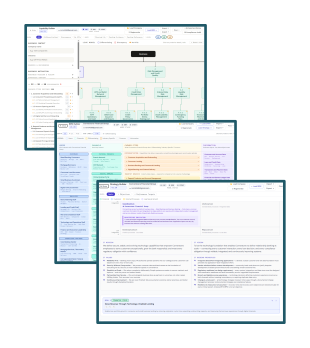
How it works — and what each stage replaces.
Three interconnected builders. Each one eliminates a distinct phase of work that would otherwise take weeks.
The EA Intelligence Platform is not an EA tool. It replaces the expensive, unguided effort most organizations undertake to produce foundational business content — the artifacts that IT strategies and investment decisions need to be grounded in. The outputs flow directly into your EA tool of choice.
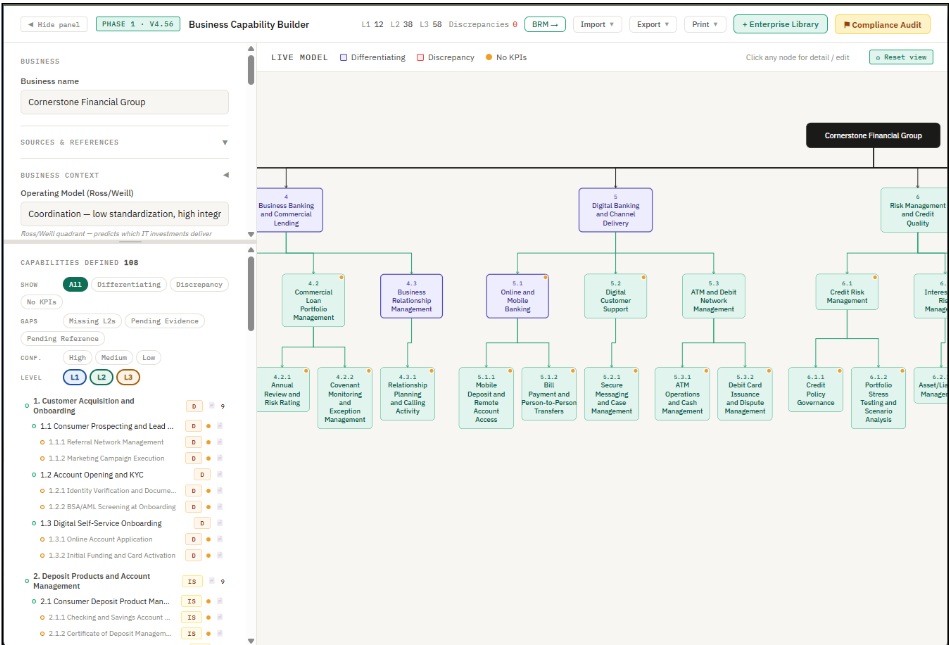
Define what your business does — not how it does it.
The Capability Builder derives a company-specific business capability model from public sources — SEC filings, investor materials, industry references — and structures it into a stable model of what the business does. It replaces the synthesis and initial build phase of a consulting engagement: the blank-page workshop, the cross-functional sessions, the weeks of iteration before anyone sees anything.
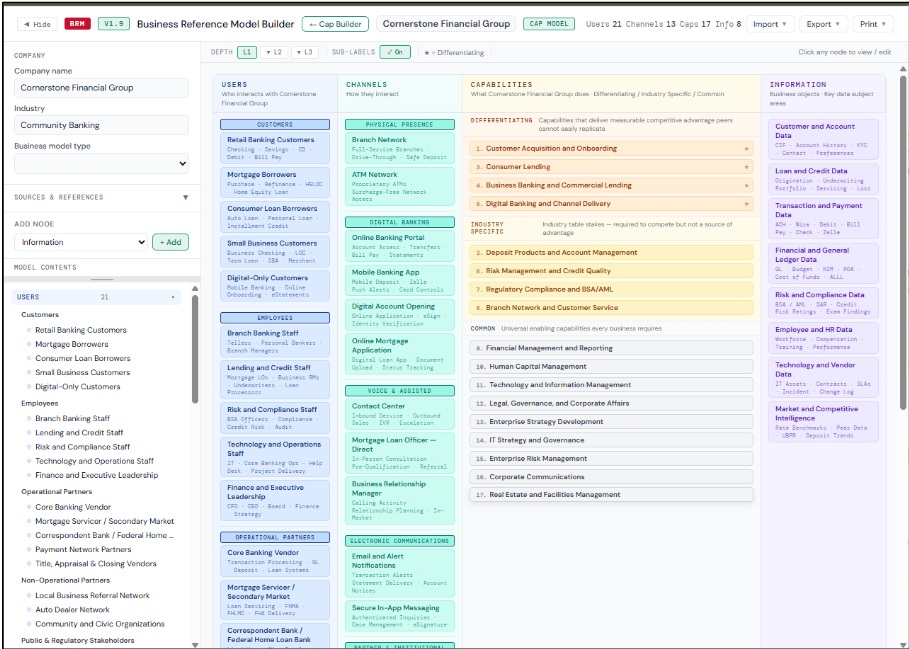
Map who the business serves, how it reaches them, and what information it depends on.
The BRM Builder derives the business reference model — users, channels, and information domains — directly from the capability model. It replaces what would otherwise be a separate multi-week effort to map who the business serves, how it reaches them, and what data it depends on. The output is the cross-cutting view that IT systems must support — making shared infrastructure decisions visible and defensible before a line of code is written.
Connect IT investment decisions directly to business goals.
The Strategy Builder derives IT mission, vision, values, and guiding principles from the business model — then produces goals, objectives, and performance targets that trace directly to business capabilities. It replaces what is normally a third sequential effort — the IT strategy engagement that follows capability and BRM work. Every IT investment can now be evaluated against a strategic foundation, without starting from scratch.
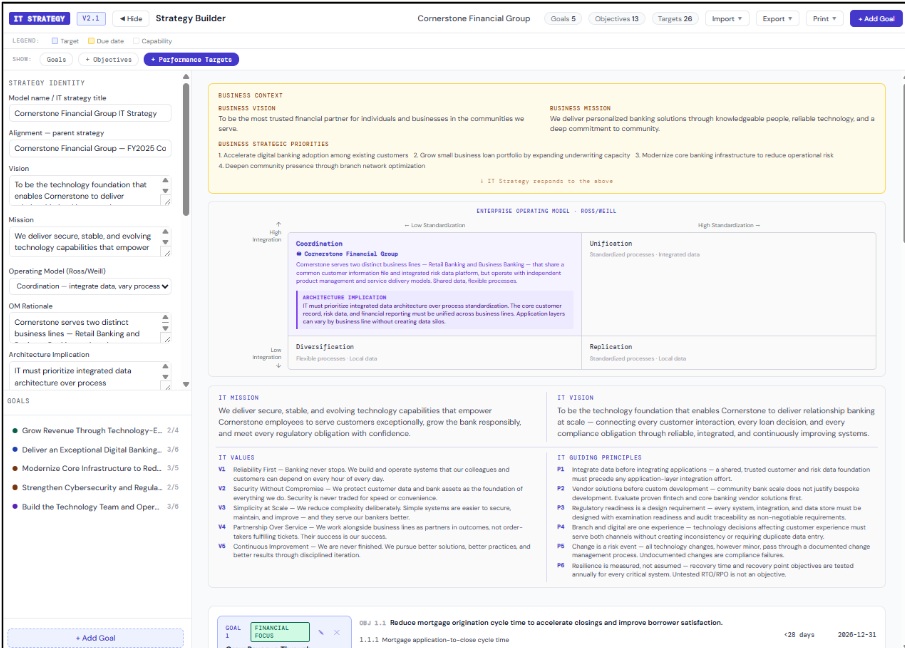
EA is not about solution design. Technology implementation is the easy part. The harder question — and the one most IT organizations never answer — is: what kind of business are we, and what does that demand of IT? The Strategy Builder derives your Enterprise Operating Model (Unification, Coordination, Replication, or Diversification) from your capability and business reference model — giving IT a governing architecture principle that makes investment decisions consistent, not ad hoc.